Showing posts with label Muffipedia. Show all posts

Saturday, August 17, 2024

Ask Muffy: What do you look for in a paddock/quilted jacket? (r)

Made in England, John Partridge for Ladies - Kept.  Photos by Salt Water New England

A paddock jacket is a smart, versatile item, perfect for Autumn.  Medium-weight, quilted, and designed for riding, it should maintain a sturdy, functional design. 

What I look for in a paddock jacket first is fit.  It needs to allow for freedom of movement, which means enough room through the shoulders and arms.  (Many paddock jackets now on the market are fitted.)  And as I no longer ride, I don’t mind my paddock jacket being a bit longer.  

Inherently a paddock jacket is not a big, heavy cold-weather garment so I don’t want it weighted down with heft.  

I also look for breathability, which is why I don’t like synthetic paddock jackets (or any synthetic quilted jacket), despite their light weight, low manufacturing cost, and the immense popularity of them originating with the made-in-England Husky jackets.  

Synthetics fail the snag-test, and the rain-test.  Synthetics are not repairable and don’t get better with age and use. I have owned and worn many of these synthetic paddock jackets but have since given all but one away.  

I look for paddock jackets made of pure wool, whether tweed or Loden cloth.  These breathe, are tougher and can take the errant branch or pricker, and they have a better drape. They will get better with age.  Wool is also quiet. The slight added weight over synthetics is a price I am happy to pay.

Tuesday, August 13, 2024

A Guide to the Irish Fisherman Knit Sweater – Good, Better, Best

Hand-knit in Ireland by Ladies with Knitting Needles -Photos by Salt Water New England

It used to be that if you travelled to Ireland and brought back an Irish/Aran Fisherman sweater (or likely more than one) they would have been hand-knit.  And by that, I mean made by Irish ladies with knitting needles.  And I am talking about pure wool, often Merino wool.  Not wool blends and certainly not cotton.

While it was once the case that virtually all Aran Sweaters, or Irish Fisherman Knit sweaters,  were hand-knit in Ireland, there are now three basic categories, which can easily confuse consumers.  By design. These are hand-knit, hand-loomed, and machine made.

I have had them all.  Irish knitwear companies have sent many to me and we have also had our own,  bought at source, i.e., in Ireland.  And it should say something that I currently only have the true hand-knits left, five of them to be exact, and one hand-loomed cardigan.   The rest I have given away.  

Beyond how they are made, I look at where they are made,  and of what are they made.  

Monday, July 22, 2024

Waxing the Barbours

Photos by Salt Water New England
This is the time of year that many wax their Barbours.

Without regular reproofing Barbours obviously are not as waterproof, but also can take on an old military fatigue jacket look, especially in the Sage.  And each waxing can add to their patina.  Some claim that Barbours' colors age differently based on their environments, meaning they would truly become more unique with age.

Before (on left) and After (on right)
How often should one reproof a well-used Barbour waxed item?  The conventional wisdom is every year.  Surprisingly, a new Barbour may sometimes need it after just a few months.  And older, well maintained Barbours can go longer without.

Disclaimer:  This technique may or may not overlap with any official (i.e. correct) way, but it is fast.

Friday, May 12, 2023

Reader Question: Besides coastal New England, what are other preppy places in the world?

 A reader question:

Dear Editor,

When I sit on the lawn of my rowing club (est. 1880) on Lake Starnberg, Bavaria (Germany), I feel reminded of New England. When I roam the streets of my town (Starnberg, Germany), I see people in classic attire driving their German-made station wagons, Land/Range Rovers, MINIs and Porsches to the sailing club, hauling boats, or going to the stables (the county of Starnberg has more horses than cows, and we are a rural milk-spilling cow-county). People spend money on organic food, culture and education. They appreciate nature and are mostly kind and friendly to each other. They live and let live.

I wonder: Besides coastal New England, what are other preppy places in the world?

Kind regards,

Monday, March 27, 2023

Sharing Garden Plants

Photos by Salt Water New England

I know from where almost every plant has come in my gardens.  The vinca, snowdrops, weigela, and lilacs came from my grandmother, the ever-spreading violets came from my oldest friend, the golden glow were given to me by the owners of the Granite Hall Store on the Maine coast.  And I would regularly visit (and put the money in the box - the honor system) the corner seasonal plant stand down the road, and who in turn donated everything to a local church fund.

And early spring is when I give away quite a few as well.  Some friends pick them up when they visit, and others I transport and help settle into their new homes.  I can drive down certain roads and see the offspring of plants in which I had served as a link in their propagation.

Separating is important to keep gardens from getting overgrown and sharing helps spread plants that will thrive in our climates and microclimates.

Garden Tools

Photos by Salt Water New England
When asked about essential garden tools and the best places to get them, readers have suggested the following:
I may be frugal in a lot of ways, but I have learned that you have to invest in a good pair of loppers and shears. (Bob NOLA)
Felco pruning shears (they even have a left-handed version!). I bought mine at Amazon but that's because I live in rural NC and nobody around had them. I get my heirloom seeds a good hardware or garden store (there are 2 in the town where I work). I still have some garden tools from my husband's grandfather (including a lovely hoe, which I admit I use more to poke a bonfire than I use in my raised bed vegetable gardens). Ergonomic trowel (from a box store) probably one of my favorites but sadly it doesn't last very long. If I could find the new design in high quality construction, I'd be thrilled! (Hoya)
A good pair of gloves with a nice gauntlet is helpful. Saves arm and hand scratches. good pruning shears are a must. (mary anne)
My favorite tools are my Felco 2 pruners, a Smith Hawken telescoping ratchet lopper, and a circle hoe.  (Joyce North)
I ran a small field-grown, perennial nursery from our home. My customers were always asking for recommendations of tools and such. My list is surprisingly small and affordable.
  • Felco Bypass Pruners
  • Felco Bypass Loppers
  • Small “nippers” for delicate trimming.
  • Kitchen string
  • Auger attachment for cordless drill which is perfect for mass planting of bulbs.
  • Deluxe soil knife w/serrated edge, replaces my late father’s hunting knives. Can be found at: GardenersEdge.com
  • Atlas Gloves, the best overall gloves out there. They are machine washable and inexpensive.
  • Heavy duty, leather work gloves for all seasons and available in women’s sizes. Can be found at: WomansWork.com
  • Muck shoes, high & low
  • Hoe, edger, and pointed shovel, inherited.
  • Hula Hoe, perfect to maintain inside edging.
  • Spear & Jackson Spade from England. This was my splurge, and well worth it.
  • Good, sturdy wheelbarrow    (Laurie Ann)  

Composting

Photos by Salt Water New England

Every day, food scraps that can't be saved, fed to the dog, or given to the chickens end up in the composter.  And about twice a year, the compost piles is harvested and the rich, intense matter is added to the garden beds or other places of need.

Sunday, March 19, 2023

The Lifecycle of Clothing Companies (including those referred to as "Preppy" or "Trad/Ivy")

Chart and Definitions Originally Shown on my Blog 'The Daily Prep' Over a Decade Ago

The clothes I like stay the same.  The places I get them change all the time.  

This sentiment is why, fairly consistently, readers send 'Questions for the Community' that are variations of: 
  • "What are the new companies providing classic clothes?" 
  • "What are the great go-to clothing companies today?"  
  • "On what companies have you given up?" and 
  • "What brands that used to be great are now totally inert?"

Thursday, March 16, 2023

Camp Mocs


Camp Mocs for Women and Men

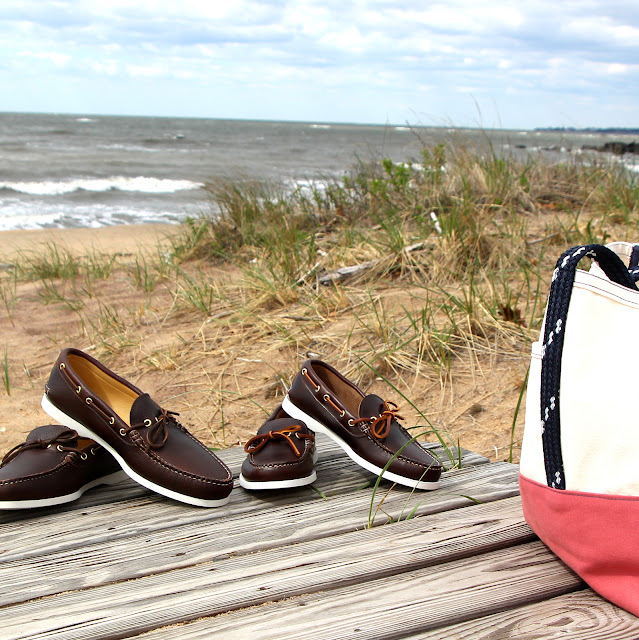
Camp Mocs, short for Camp Moccasins, are a classic casual slip-on shoe for men and women.  Flattering and easier than boat shoes, they are perfect for business casual when new and for everyday wear when older.   They were invented by Leon L. Bean, and L.L. Bean first introduced these shoes in 1936.

With white soles, they can be worn on boat decks.   A red sole is a fine alternative for autumn.  They can be worn with or without socks.     

Sunday, March 12, 2023

The New England WASP Ethos of Fierce Independence

One of the strongest attributes to the Salt Water New England culture is independence.  Fierce independence.  

Tuesday, January 17, 2023

Checkbook Friends

The invitations always follow the same format.  "Let's meet at [some expensive restaurant/resort] at 7:15 pm on Friday night.  I will make reservations.  [Some person you want to see] is coming as well, and I will see if [other person] and [other person] can make it."

Or join me at The University Club or some opening night performance, try out the new guest wing, see my new house on the island, have lunch at the yacht club, or take the new (old) 380SL for a spin.

And, it does not need to be said, that friend will insist on picking up the tab.

These are checkbook friends.  They are generous to a fault.  Some even pick up air fare and book blocks of hotel rooms.  They have vast social networks.  But every event, and in fact every conversation, is on their terms.   

These checkbook friends are always charming (often self-deprecating, describing themselves as "cranky" or "bossy").  They are genuinely valued friends.  And tremendous fun.  

And these relationships have their golden time, even if they eventually wind down.  

Offering to go Dutch seems like a solution, but trying to pull it off gets resentful glances.  Suggesting gatherings that don't involve bills also seems like a good idea but does not alter the trajectory of the more sponsored events.  

For many young people, having an older check-book friend (or relative) can be highly influential.

Friday, November 4, 2022

Loden


 Loden is a thick wool fabric originated in Tyrol, Austria centuries ago, and popular in Europe's Alpine region.  It is traditionally fabricated in blends of natural olive green, greys, and browns.  

"Loden is to the Bavarian what tweed is to the Scot—a fabric so long indigenous to its land, of such peasant origins that it has become almost a folk cloth." (Sports Illustrated, October 01, 1956)

As with all wool, loden has the wonderful properties of warmth and breathability.  

But loden is dense and does not stretch.  Because the wool yarn is first woven—not knitted—it is able to better maintain a specific shape (thus the iconic stiff, standup Bavarian collar).  

It is also know for being water repellant, as well as wind repellant and even dirt-repellent.

While it served for generations as workwear keeping Alpine shepherds and woodcutters both warm and dry, the softer loden cloth today is made from merino wool and mixed with mohair, cashmere, alpaca, angora, or silk.

Photo credit:  Muffy Aldrich

Wednesday, November 2, 2022

The New England Headmaster's Walk

Photo by Salt Water New England

The New England prep school headmaster's walk is immediately identifiable.  When walking from office to dining hall, for example, it combines two elements.

The first is surveying the quad.  What is the mood?  Is there a productive hum or is there a pervasive dourness?  By the third week of school, the headmaster has deliberately memorized the names of all the students, and is getting a feel for individual temperaments.  Likely the headmaster will make two or three engaging and knowing comments on the five minute trek.  

The second is the stoop.  The headmaster habitually looks for scraps of paper or other debris to scoop down upon and pick up.  By the time the headmaster reaches the dining hall, there is a handful ready for depositing in the proper receptacle by the entrance.  

And this is done every step of every day during the headmaster's reign.  

Sunday, October 30, 2022

New England Witches (From Our Family Tree)

Arthur Miller (Photo by my Father) 

A staple of many New England prep schools' curricula, especially this time of year, is Arthur Miller's The Crucible.  In both English and political science classes, we have all read it, seen it, discussed it, written papers about it, taken tests on it, and likely acted in one or more productions of it.  What makes it more interesting is how many classmates had ancestors that were involved.

We have a handful of 9th Great-Grandparents who were accused witches and convicted witches in New England in the 1600s and they include: Susannah Martin, Mary Perkins Bradbury, Frances Alcock Hutchins, John and Joan Carrington and Jane Walford.

As well as the accused, we also have direct ancestors who played many of the other roles in the 17th Century Witch Trials: Accuser, Witness, Neighbor, Jury, and the Law.

Sunday, October 2, 2022

The Covert Coat

Muffy Aldrich Wearing a Covert Coat from Cordings of Piccadilly
The Covert Coat, a most British garment, was originally designed in the 19th century as a riding or hunting coat. (A covert is a thicket in which game can hide, and so a common meeting place before a day in the field.) The material is tough enough to survive brambles, the pockets are deep enough for game, and a covert coat has a single vent to go over a saddle.

"Covert" refers as much to the tightly woven wool twill as the coat itself, and even the color.  The traditional fawn hides both horsehair and at least some mud.  

The covert coat is sized to fit over a business suit, but can be worn slightly more casually.  

Shown here:

With:

Thursday, September 22, 2022

Velvet Slippers

Photos by Salt Water New England
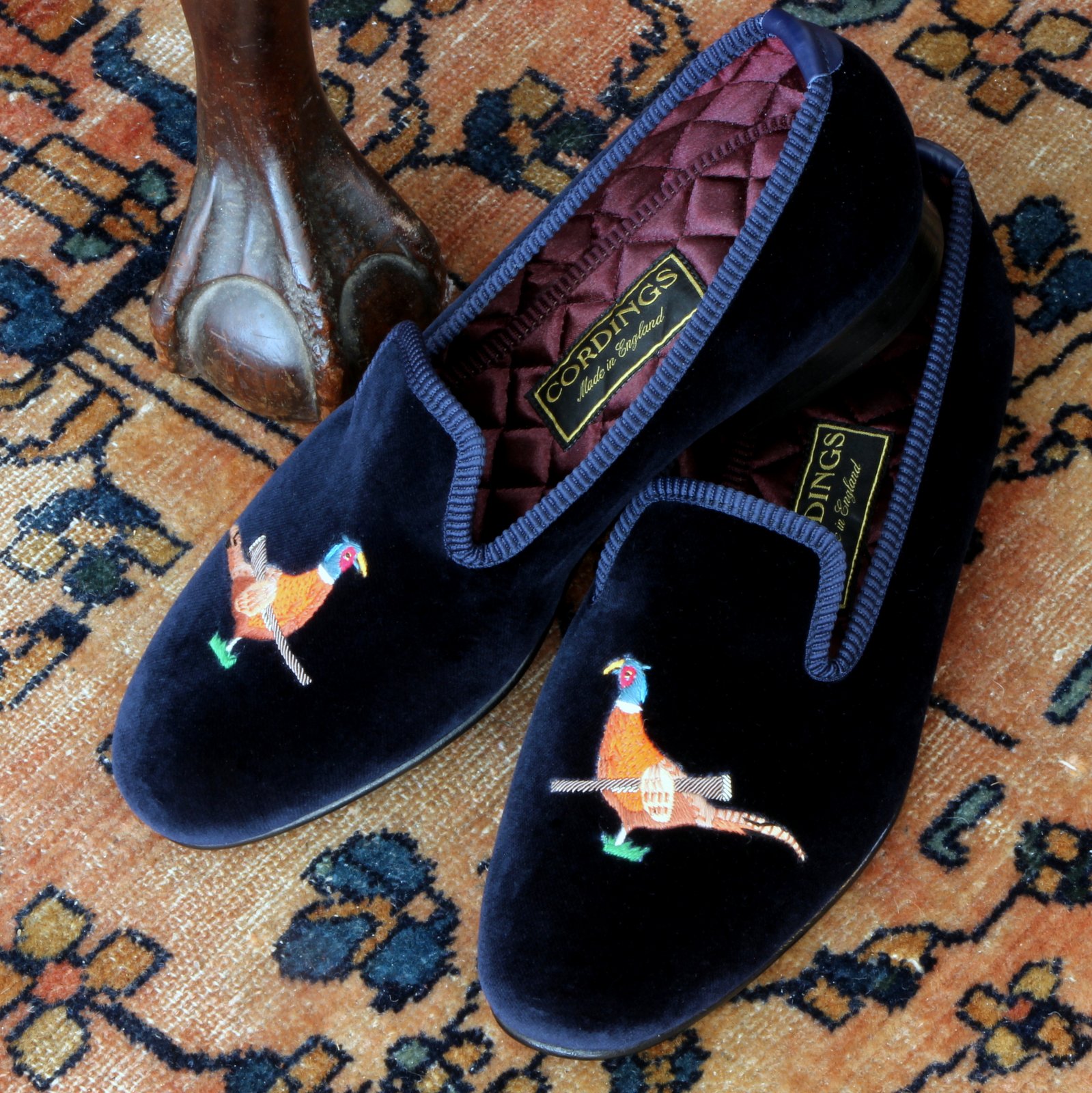
Prince Albert, the royal consort of Queen Victoria, popularized a formal slipper around 1840, now referred to as The Albert Slipper.

The Albert Slipper is made of velvet uppers (traditionally black), with quilted linings, a finishing braid, and often with some embroidered motif or insignia on the vamp for personalization and, perhaps, wit.  This "velvet slipper" style is typically available today with a leather sole, making it closer to a soft shoe.  

When used in Victorian England, guests would switch from their outdoor to indoor footwear when arriving to avoid tracking in gravel and sand.  

Sunday, August 28, 2022

All-over Fair Isle Jumpers/Sweaters

Photos by Salt Water New England

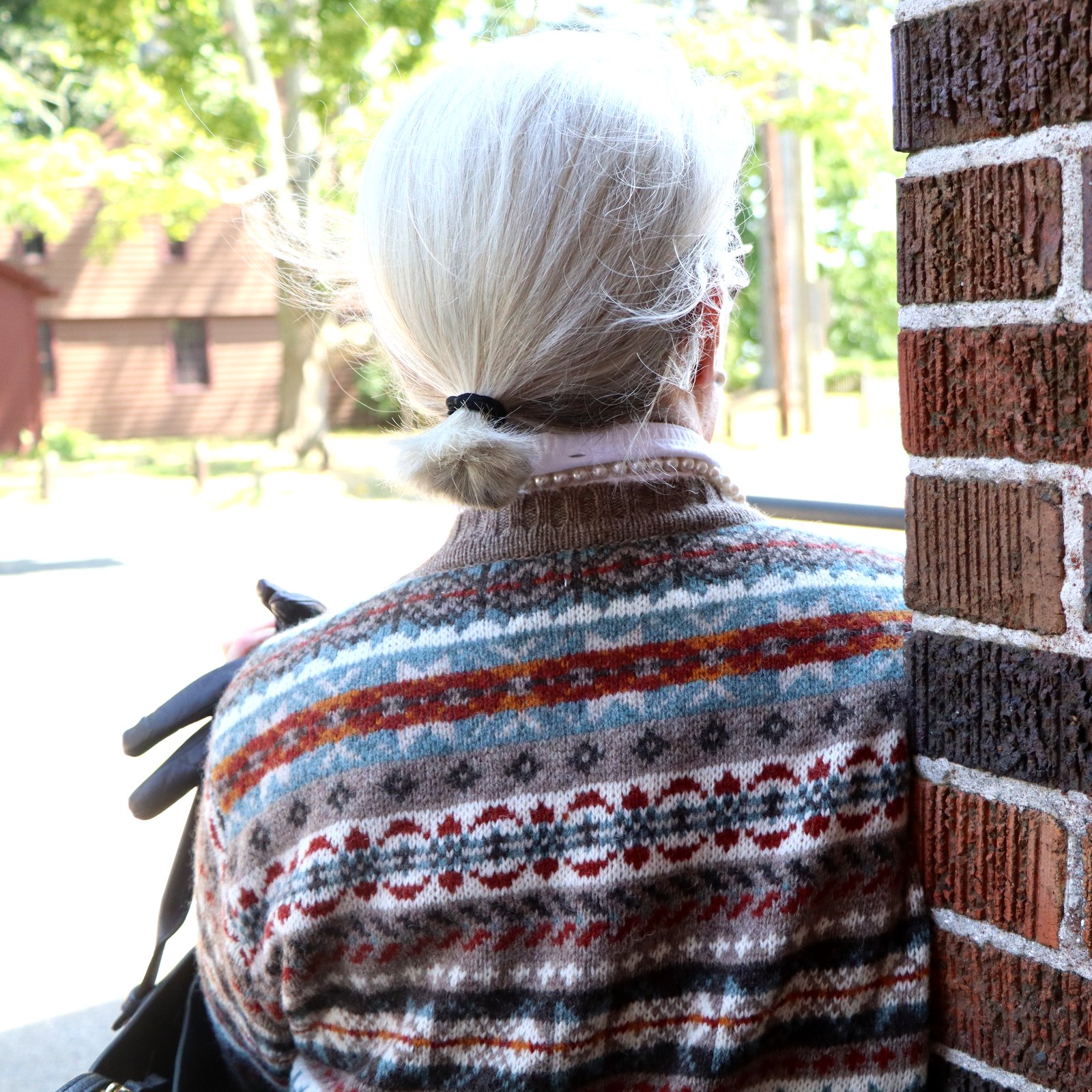
For centuries, knitters in the Shetland Islands have been producing distinctively patterned jumpers.  These designs first appeared on one Shetland Island, Fair Isle.  Some say the designs evolved from Spanish patterns (a Spanish vessel was shipwrecked on Fair Isle in 1588).  Others believe, given Fair Isle is just 250 miles west of Norway, the patterns were more Scandinavian in influence. The designs spread across the Shetland Islands, where they have been more widely knit since at least the end of the 19th century

In the early 1920s, Shetland dealer James A Smith gave an (all-over) Fair Isle jumper to then Prince of Wales.  The iconic image of the fashionable Prince, later Edward VIII, wearing it playing golf instantly made all-over Fair Isle jumpers popular.

Fair Isles had many things going for them following WWI, not the last of which being the revolution in the role of women. Woman earning and spending their own money led to the demise of corsets and lace knitting.  Gender-neutral styles, such as Shetland jumpers, were in.

"The original Fair Isle sweaters [had] colors drawn from natural dyes, and the rich patterning used lavishly across the whole sweater." (New York Times, March 13, 1983).  But the all-over approach was painstaking.  To satisfy the growing demand worldwide in the following decades, authentic Shetland styles soon compromised to the significantly easier but still beautiful yoke-only approach design.  

Thursday, August 18, 2022

MGs

Photos by Salt Water New England

MGs are known for their British style, speed, and handling.  And also for numerous mechanical and electrical issues.  

MG is short for Morris Garages, which William Morris founded in 1924 to make sports cars.  The company was later consolidated in 1935 into Morris' larger entity Morris Motors.   

MGs made inroads into the US when, at the end of World War II, American troops who had been stationed in England and loved their pre-war models took their MGs home with them.

America soon became a critical marketplace.  In 1955,  MG release of the legendary MGA.  Its light weight and sporty handling meant a fun but controllable ride. It was very popular, despite technology and construction issues.  This was followed by the successful MGB.

Thursday, August 11, 2022

Scottish Tartan Throws

Some of Muffy Aldrich's Scottish Tartan Throws

This is the time of year when I start taking out the Scottish tartan throws for many of our chairs and beds.   Typically made of British wool, they have all of its fabulous properties.  They are fire resistant, breathable, anti-microbial, warm, lightweight, hearty, and repairable.

And while knockoffs abound, there is almost no reason not to get authentic versions.  For a surprisingly reasonable amount, one can get throws and blankets that have have gone through every state (design, dyeing, blending, carding, spinning, weaving, and finishing) in various historic Scottish mills. These are products with soul.  

Because they are so useful in so many places (many keep a few in the back of the car), they make perfect gifts, as long as you resist the urge to keep them for yourself.  

Photo credit: Muffy Aldrich

Wednesday, August 3, 2022

Schoolboy Scarves


Schoolboy scarves, also called academic scarves and university scarves, are a traditional way for people to show associations with specific academic institutions.  These scarves are typically made of a fine, very high-quality, medium or heavyweight Saxony wool.  Schoolboy scarves have two or more colors, and are traditionally 6 feet long.

Scarves are one of the oldest ways people used clothing to show alliances. Records show examples of scarves used for rank during the Qin dynasty around 220 BC.  By the 17th century, the tradition had taken hold at some of the most distinguished universities in the United Kingdom and Ireland. The stripes were a later addition, which came around 1939 when manufacturer Luke Eyres originated the design as a way to reuse long wool strips during a fabric shortage.